Muscle Soreness After 40: Your Top Questions Answered
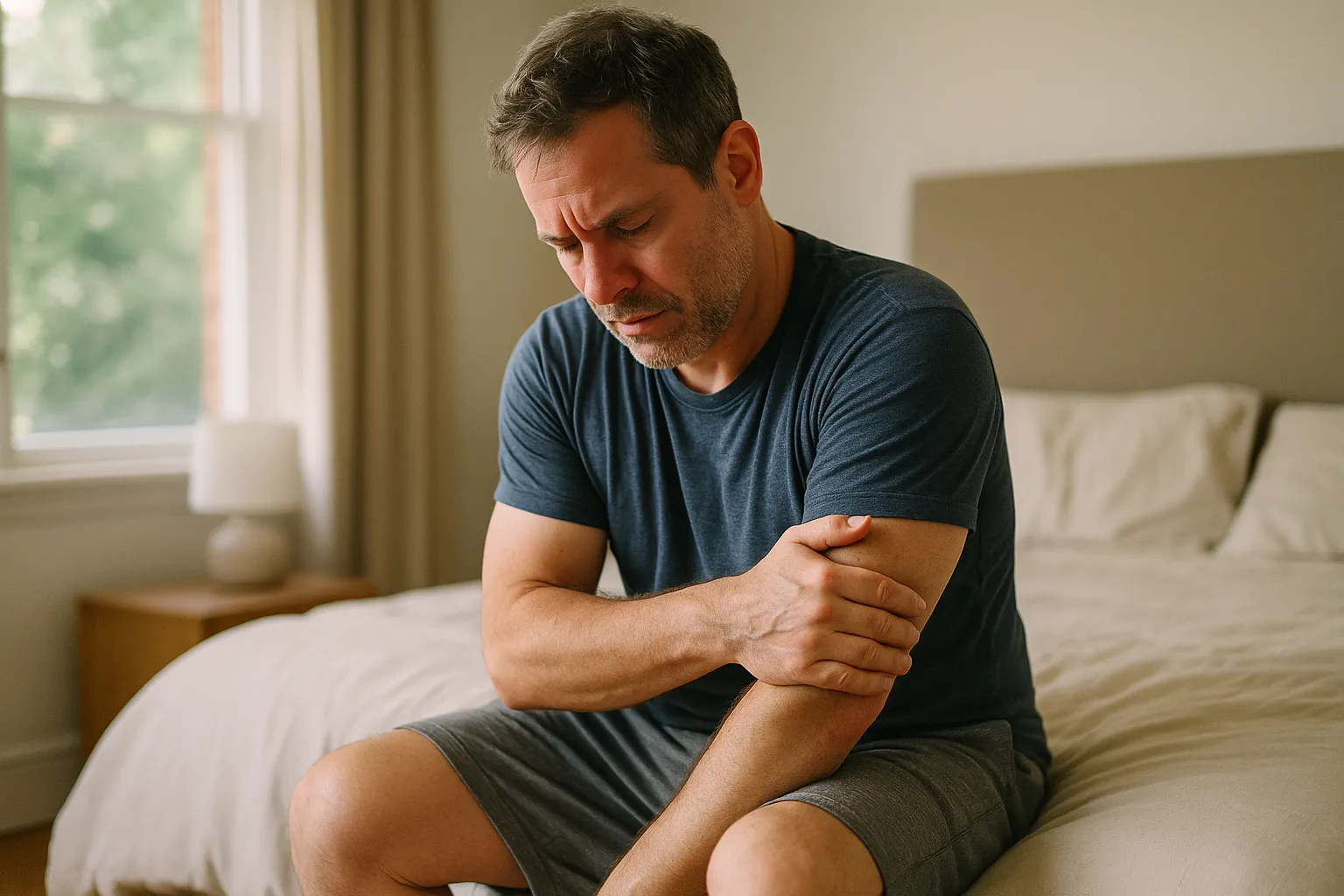
If you've noticed that muscle soreness seems to hang around longer than it used to, you're not imagining things. Changes in muscle repair speed, circulation, and hormone levels after 40 can all affect how quickly soreness fades. The good news is that understanding why it happens — and what genuinely helps — can make recovery feel far more manageable. Below are answers to the questions men over 40 ask most often about muscle soreness.
What Causes Muscle Soreness After 40?
The burning or stiffness you feel a day or two after exercise is usually delayed onset muscle soreness (DOMS). It happens when muscle fibers experience tiny amounts of stress from unfamiliar or intense movement, triggering a natural inflammatory repair response. After 40, several factors can make this process slower or more noticeable:
- Reduced blood flow efficiency, which can slow nutrient delivery to tired muscles
- Lower levels of certain repair-related hormones
- Less elastic connective tissue, which may increase strain during exercise
- Accumulated fatigue from work, stress, or poor sleep
This doesn't mean soreness is something to fear — it's often a normal sign that muscles are adapting. But it does mean recovery strategies matter more as you age.
Is Muscle Soreness a Sign of a Good Workout?
Not necessarily. Many men assume that feeling sore the next day means a workout "worked," but soreness isn't a reliable measure of effectiveness. You can make solid strength or endurance gains without significant soreness, especially once your body adapts to a routine. On the other hand, extreme soreness after every session may actually signal that you're overtraining or not allowing enough recovery between workouts.
If you're curious about how training load and rest intervals interact, this step-by-step guide to muscle recovery time breaks down how long muscles typically need to repair based on workout intensity.
How Long Should Muscle Soreness Last?
For most people, DOMS peaks around 24 to 72 hours after exercise and gradually fades within three to five days. After 40, it's common for that window to stretch slightly longer — sometimes up to a week for very intense or unfamiliar movements like heavy eccentric lifting.
Soreness that lingers much longer than a week, or that's accompanied by sharp pain, swelling, or limited range of motion, may indicate a strain or overuse injury rather than normal muscle adaptation. In that case, it's worth checking in with a healthcare provider.
What Actually Helps Muscle Soreness Recover Faster?
There's no instant fix, but research suggests several habits may help ease soreness and support the body's natural repair process:
- Gentle movement. Light activity like walking or easy cycling can promote blood flow without adding stress. Many men find active recovery days especially useful for keeping muscles loose between harder workouts.
- Hydration and balanced nutrition. Adequate fluids and protein intake support tissue repair.
- Sleep quality. Deep sleep stages are when much of the body's physical repair work happens.
- Myofascial release. Tools like foam rollers may help reduce muscle tightness and improve mobility; for more detail, see this overview of foam rolling benefits.
- Warming up properly. A thoughtful warm-up can reduce the intensity of soreness from the next session by preparing muscles gradually.
None of these approaches will eliminate soreness entirely, but together they may shorten recovery time and make workouts feel more sustainable.
Does Stretching Prevent Muscle Soreness?
This is one of the most persistent fitness myths. Static stretching before or after a workout has not been shown to meaningfully prevent DOMS. Stretching can still be valuable for flexibility and joint comfort, but it shouldn't be relied on as a soreness-prevention strategy. Gradual training progression and proper warm-ups tend to play a bigger role.
Can Muscle Soreness Be a Sign of Something Else?
Occasionally, yes. While typical soreness is dull, symmetrical, and improves daily, certain patterns deserve attention:
- Soreness that's sharp, localized, or worsens instead of improving
- Swelling, bruising, or visible deformity
- Numbness or tingling alongside muscle pain
- Soreness that appears without any recent increase in activity
These signs could point to an injury, nerve issue, or circulation concern rather than normal exercise-related soreness. If you experience them, it's best to consult a healthcare professional rather than trying to train through it.
How Can I Reduce Soreness Long-Term?
Consistency tends to matter more than any single recovery trick. Muscles that are regularly but moderately challenged adapt over time, which often reduces the severity of soreness even as training intensity increases. Gradually progressing workload, varying exercise types, and allowing adequate rest between intense sessions all support this adaptation process.
Frequently Asked Questions
Is it okay to work out again if I'm still sore? Light to moderate activity is usually fine and may even help circulation, but avoid intensely working the same sore muscle group until discomfort has noticeably eased.
Does age make soreness worse, or just longer? Most research suggests the intensity of soreness doesn't necessarily increase with age, but recovery time often does, due to slower tissue repair and circulation changes.
Can supplements eliminate muscle soreness? No supplement can "cure" soreness. Some nutrients support overall muscle function and recovery, but soreness is primarily managed through training habits, rest, and recovery practices rather than any single product.
Final Thoughts
Muscle soreness after 40 is usually a normal — even healthy — part of staying active, but it often requires more deliberate recovery strategies than it did in your 20s or 30s. Paying attention to sleep, hydration, gentle movement, and gradual training progression can make a meaningful difference in how quickly you bounce back. If soreness ever feels unusual or doesn't improve with time, it's worth getting checked out rather than pushing through it.
This article is for informational purposes only and is not a substitute for professional medical advice.