Low Impact Cardio: A Beginner's Guide for Men Over 40
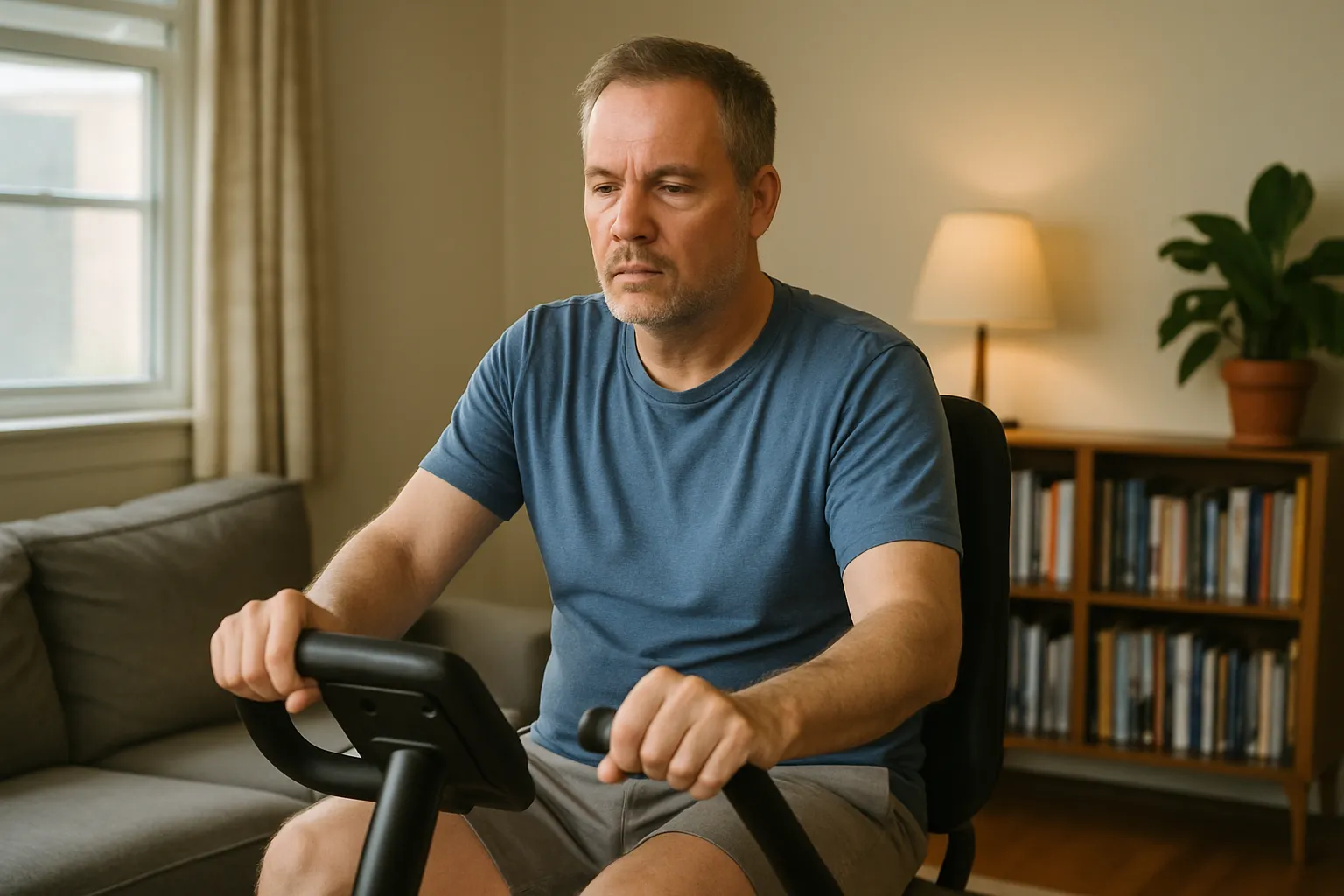
If you've heard the term but aren't sure where to start, low impact cardio simply means aerobic exercise that keeps at least one foot on the ground at all times — think brisk walking, cycling, swimming, or using an elliptical machine. It raises your heart rate and supports circulation without the jarring stress that running, jumping, or high-intensity interval training can place on your joints. For men over 40 dealing with stiffer joints, slower recovery, or inconsistent energy, this style of movement can be a sustainable way to build endurance over time.\n\nThis guide walks through the basics from the ground up, so even if you haven't exercised regularly in years, you'll know exactly how to begin.\n\n## What Counts as Low Impact Cardio?\n\nLow impact doesn't mean low effort. It simply refers to the amount of force your joints absorb with each movement. Common examples include:\n\n- Brisk walking or incline treadmill walking\n- Stationary or outdoor cycling\n- Swimming or water aerobics\n- Rowing machines\n- Elliptical trainers\n- Low-impact dance or step classes\n\nCompare this to high impact activities like running, jumping rope, or plyometric drills, where both feet leave the ground and landing forces travel through your knees, hips, and lower back.\n\n## Why This Matters More After 40\n\nAs men age, several physiological changes make gentler cardio options more appealing:\n\n- Joint wear: Cartilage naturally thins over time, making repetitive high-impact stress less forgiving.\n- Slower recovery: Muscle fatigue can linger longer, so bodies often respond better to moderate, repeatable sessions than to sporadic intense ones.\n- Circulation support: Steady aerobic movement is associated with healthy blood flow, which plays a role in energy levels and overall stamina.\n- Consistency over intensity: Sustainable routines that don't leave you sore or injured are easier to stick with long-term, which matters more for overall fitness than any single hard workout.\n\nResearch on aerobic exercise consistently links moderate, regular activity with better cardiovascular health markers and improved daily energy — without requiring extreme effort.\n\n## Getting Started: Your First Steps\n\n### 1. Pick One Activity You Actually Enjoy\n\nThe best low impact cardio is the one you'll repeat. If you dislike swimming, don't force it. Walking outdoors, riding a bike, or using a rowing machine at the gym are all equally valid starting points.\n\n### 2. Use the Talk Test for Intensity\n\n You don't need a heart rate monitor to gauge effort. If you can hold a conversation but feel slightly winded, you're in a good moderate zone. If you can't speak more than a few words, dial it back.\n\n### 3. Start Small and Build Gradually\n\nBeginners often overestimate what they can sustain. A realistic starting point:\n\n- Week 1–2: 15–20 minutes, 3 times per week\n- Week 3–4: 20–30 minutes, 3–4 times per week\n- Week 5 onward: 30+ minutes, 4–5 times per week\n\nThis gradual buildup helps prevent early burnout and gives your joints and connective tissue time to adapt.\n\n### 4. Time It Around Your Energy Patterns\n\nSome men find morning sessions easier to stick with because they set a positive tone for the day. If you're rebuilding a routine from scratch, pairing cardio with an established habit — like your morning energy routine — can make consistency far easier than trying to squeeze it in later when motivation fades.\n\n## Building a Simple Weekly Routine\n\nHere's an example beginner-friendly week combining variety and rest:\n\n- Monday: 20-minute brisk walk\n- Tuesday: Rest or light stretching\n- Wednesday: 20-minute stationary bike session\n- Thursday: Rest\n- Friday: 25-minute swim or elliptical\n- Saturday: 30-minute walk with a friend or partner\n- Sunday: Rest\n\nAs your stamina improves, you can extend session length before adding frequency.\n\n## Pairing Cardio With Strength Training\n\nLow impact cardio works well alongside resistance training rather than replacing it. Cardio supports circulation and recovery between strength sessions, while strength training helps maintain muscle mass, which naturally declines with age. If you've noticed your gains stalling despite consistent effort, it may help to review how cardio and rest days fit into your overall plan — this is covered in more depth in our guide on why training progress stalls after 40.\n\n## Supporting Recovery Between Sessions\n\nEven low impact workouts create fatigue that needs to be managed. A few basics:\n\n- Stay hydrated before and after sessions\n- Prioritize sleep, since this is when much of physical recovery occurs\n- Eat enough protein and whole foods to support muscle repair — for specific guidance, see what to eat to recover faster after exercise\n- Allow at least one full rest day between higher-effort sessions\n\n## Common Beginner Mistakes to Avoid\n\n- Going too hard too soon: Enthusiasm often leads to overtraining in week one, followed by burnout by week three.\n- Skipping warm-ups: Even low impact activity benefits from 5 minutes of light movement beforehand to prepare joints and muscles.\n- Ignoring posture and form: Poor walking or cycling posture can create unnecessary strain over time.\n- Comparing to others: Progress varies widely based on starting fitness level, age, and recovery capacity.\n\n## FAQ: Low Impact Cardio Basics\n\nHow often should beginners do low impact cardio?\nMost beginners do well starting with 3 sessions per week, gradually building toward 4–5 as stamina improves.\n\nIs low impact cardio enough on its own for fitness after 40?\nIt's a strong foundation for cardiovascular health and endurance, but combining it with strength training generally supports more complete fitness, including muscle maintenance and bone density.\n\nCan low impact cardio help with energy levels throughout the day?\nMany men report steadier energy with consistent aerobic activity, likely tied to improved circulation and better sleep quality, though individual results vary.\n\n## Final Thoughts\n\nLow impact cardio isn't a lesser version of "real" exercise — it's a practical, joint-friendly way to build lasting endurance, especially if you're returning to fitness after a break or managing age-related recovery changes. Start small, stay consistent, and let your body adapt gradually. Over time, these sessions can become one of the simplest tools for supporting daily energy and long-term stamina.\n\nThis article is for informational purposes only and is not a substitute for professional medical advice.